
The House She Left to Me
The house still smelled like him.
Cedarwood and coffee. The ghost of too much cologne, always worn like armor before dinners out. I kept breathing it in, greedy for the last traces of him, terrified it would all disappear—as he had, in one impossible instant.
One minute, he was there. Making some half-serious remark about living to ninety. The next, a phone call. A state trooper’s voice. A solitary crash. Fatal.
I flew back the next morning and hadn’t left since.
My apartment in the city sat dark and waiting, but this house—our house—was the only place where grief made any sense. Where it wasn’t an open void, but something shaped. Familiar. Livable.
Elizabeth—my stepmother in title only—was cordial. Polished, even. Like a politician’s wife, with her careful grace and curated sorrow. Her two young children stormed through the hallways in bursts of joy, untouched by the weight of loss. They didn’t understand death. Not really.
She was 39. I was 22.
Once, she was Ms. Elizabeth, my seventh-grade English teacher. The one with the tight ponytail and the red pen that bled disdain. She made a sport of humiliating me—too bright, too eager, too visible. Every time I raised my hand, she would sigh with withering elegance:
“Let’s give someone else a turn, Jenelle.”
Once, she returned a book report with the note:
Not everything needs your opinion, sweetheart.
I stopped raising my hand.
Years later, when my father introduced her as his new girlfriend, I had to swallow the nausea like a bad drink. I watched her charm him across the dinner table, wearing a smile that pretended she hadn’t once made me feel so small in front of thirty kids.
I said nothing. For his sake.
After my mother died, he was alone for a long time. Elizabeth made him laugh again. She gave him a reason to dust off the stereo, to try new recipes, to dance badly in the kitchen. So I buried my resentment and swallowed my pride. I convinced myself that silence was strength.
And when he died, I did what daughters do: I stayed.
I cooked. I folded laundry. I stocked her pantry. I played distraction and comfort for two confused little boys who didn’t know why the house had gone so quiet. I didn’t complain when she vanished into her bedroom, leaving me to catalog my father’s shirts, his vinyl collection, his scent still folded into his sweaters.
But Elizabeth wasn’t mourning. She was managing. Curating. Hosting.
I was grieving.
And then, exactly one month after the funeral, she knocked on my bedroom door with a manicured hand and an envelope that crackled with malice.
“I thought we should clarify a few things,” she said, all saccharine and starch.
Inside was a bill.
Rent for the guest room—my old room. Utilities. Groceries. A pair of dinners. Even the cleaning supplies I’d used. Neatly itemized, as if she’d kept a ledger of every moment I tried to hold myself together.
I didn’t blink. Didn’t flinch. I let her see nothing.
But something in me snapped.
She had married my father. Once publicly mocked me. And now, she was charging me to exist in the home where I had once measured my height on the doorframe?
What she didn’t know—what she hadn’t bothered to find out—was that the house wasn’t hers to lord over.
It was mine.
The next morning, I made coffee. Toasted a bagel. I moved through the kitchen like I belonged there—because I did. Then I left an envelope on the counter.
She floated in, all silk robe and self-satisfaction, and reached for it.
She opened it. And froze.
No check. Just a folded letter.
Her voice dropped its sweet coating. “What the hell is this?”
I looked her in the eye. “I thought we should clarify a few things.”
And then my attorney, Kyle, stepped into the kitchen with the calm finality of a closing chapter.
“As of Jacob’s passing,” he said, “this property legally belongs to Jenelle. Sole beneficiary. It’s all been filed—two years ago.”
Elizabeth’s face collapsed in stages.
“No. That’s not possible. He wouldn’t—he loved me.”
“He did,” I said. “And he left a trust for your children. But this house? He built it with my mother. It was never going to be yours.”
She sputtered. Threatened. Insisted there had been promises.
But promises are not deeds. Nor wills. Nor notarized papers in locked drawers.
I gave her thirty days. I didn’t have to. But I did.
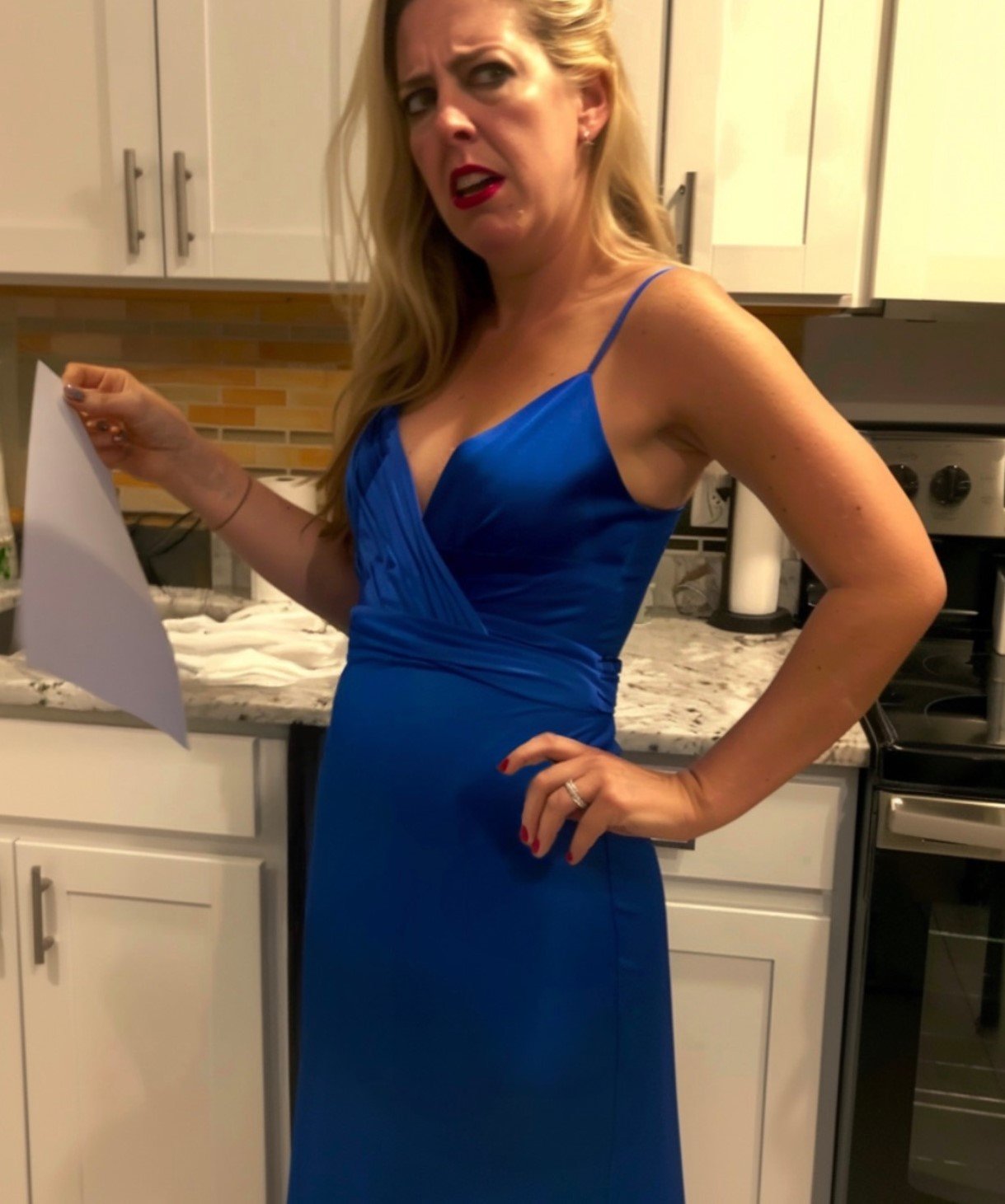
When she left, there was no goodbye. Her children looked back once. She didn’t.
I stood on the porch, the sky bleeding gold behind her retreating moving truck. The scent of my mother’s lilacs drifted in the air, soft as a memory.
You did what needed to be done, Elle, it seemed to whisper.
And then, peace.
No more footsteps, no artificial sweetness echoing down the halls. Just the hum of the fridge, the creak of old stairs, the music of a house remembering itself.
I stayed. Of course I did.
Grief isn’t linear. It has no rules. It moves in corners and memory. And this house, with all its scars and corners, offered me pieces of my father I hadn’t expected to find.
Handwritten notes. Old maps. My mother’s recipes. A single green Post-it that read:
You’ll always be Dad’s girl.
That note broke me open.
And rebuilt me.
I let the lease on my apartment expire. Packed up the boxes I’d never unpacked. I adopted two shelter puppies—one clumsy, the other fierce. I named them Peanut and Butter. My father would’ve laughed. My mother would have knitted them sweaters.
Sometimes, I sit on the steps at twilight, tea in hand, dogs dozing on either side. I can still hear them. My parents. Myself, younger. The heartbeat of a house that survived us all.
Elizabeth taught me to be small. To doubt. To disappear in my own story.
But in the end, I passed her test. I found my voice.
And I used it.
Not for revenge.
For home.