
When I moved to the broken-down farm I’d just inherited, I was chasing peace. Quiet mornings. Clean slates. Instead, I got a yellow fence war with a strange neighbor—and the unraveling of a story I never expected.
I was raised by a foster family who truly tried. They packed my lunches with handwritten notes and clapped loudly at my school plays—even the one where I played a cardboard tree and never said a word.
But kindness isn’t the same as connection. Real love, I’ve learned, is knowing where you come from.
I never knew mine.
My adoption papers were full of blank spaces. No names, no birthdays, no stories—just silence where a beginning should’ve been.
Sometimes I imagined my parents were secret agents or missing explorers. Anything felt better than believing they’d simply… chosen not to care.
By 15, I was handing out flyers outside strip malls. At 16, walking dogs for strangers who forgot my name. At 18, I was pouring coffee for grumpy regulars who tipped in nickels and gave me unsolicited life advice.
“You’ve got kind eyes, sweetheart. Marry rich.”
I smiled through all of it, wearing a crooked name tag and holding onto dreams that kept slipping through my fingers. I tried job after job: caregiver, gardener, even roadkill collector. Don’t ask.
I knew how to survive. But deep down, I felt like bad luck ran in my DNA.
Then, at 27, I finally landed an office job with a real desk, weekends off, and a fridge that wasn’t shared with six roommates. The same day, I got sick. Six months of vague tests and even vaguer doctors.
“Could be stress.”
You think?
At 30, I became a nanny. I was good at it—until the other nanny accused me of stealing.i didn’t, but they fired me anyway. i stood outside with a suitcase, a dwindling emergency fund, and the kind of ache that makes your whole body feel hollow.
Then my phone rang.
“Ellie? This is Jake. I was your father’s attorney.”
“My who?”
“Your biological father. His name was Henry. He passed recently… and he left you his farm.”
“A father?” I repeated. “A farm?”
“You’re his only heir. I’ll explain more in person.”
I didn’t sleep that night. I had a father. And now, I had something that was mine.
The house was crumbling—paint peeling, weeds like a second lawn. But the barn? Fresh red paint. Clean. Cared for. It felt… watched over.
Inside, hay was neatly stacked, the floor swept. A basket of eggs sat ready. Water glistened in a clean bucket. Chickens clucked softly, and a calm brown-and-white cow blinked at me like I was expected.
Then came the dog. He was waiting by the door. Shaggy fur, gentle eyes. He licked my hand like we’d met before.
“Okay, weird,” I muttered. “Who’s been taking care of you?”
It had been a week since my father died. So… who had kept this going?
The house was quiet inside. Dust floated like tired snowflakes in the sun. On the wall hung a single photo—a man in his 50s. His eyes looked kind. My chest tightened.
I didn’t know him. Not really. But I stayed.
The days became rhythm. I fixed the fence, painted the porch, and figured out how not to get pecked while collecting eggs. It was like something ancient in me had been waiting for this life to start.
“Farmer mode: ON.”
Then she showed up.
Linda. The neighbor.
She didn’t talk much. Seemed shy. Then… odd. Then something stranger.
She started copying me.
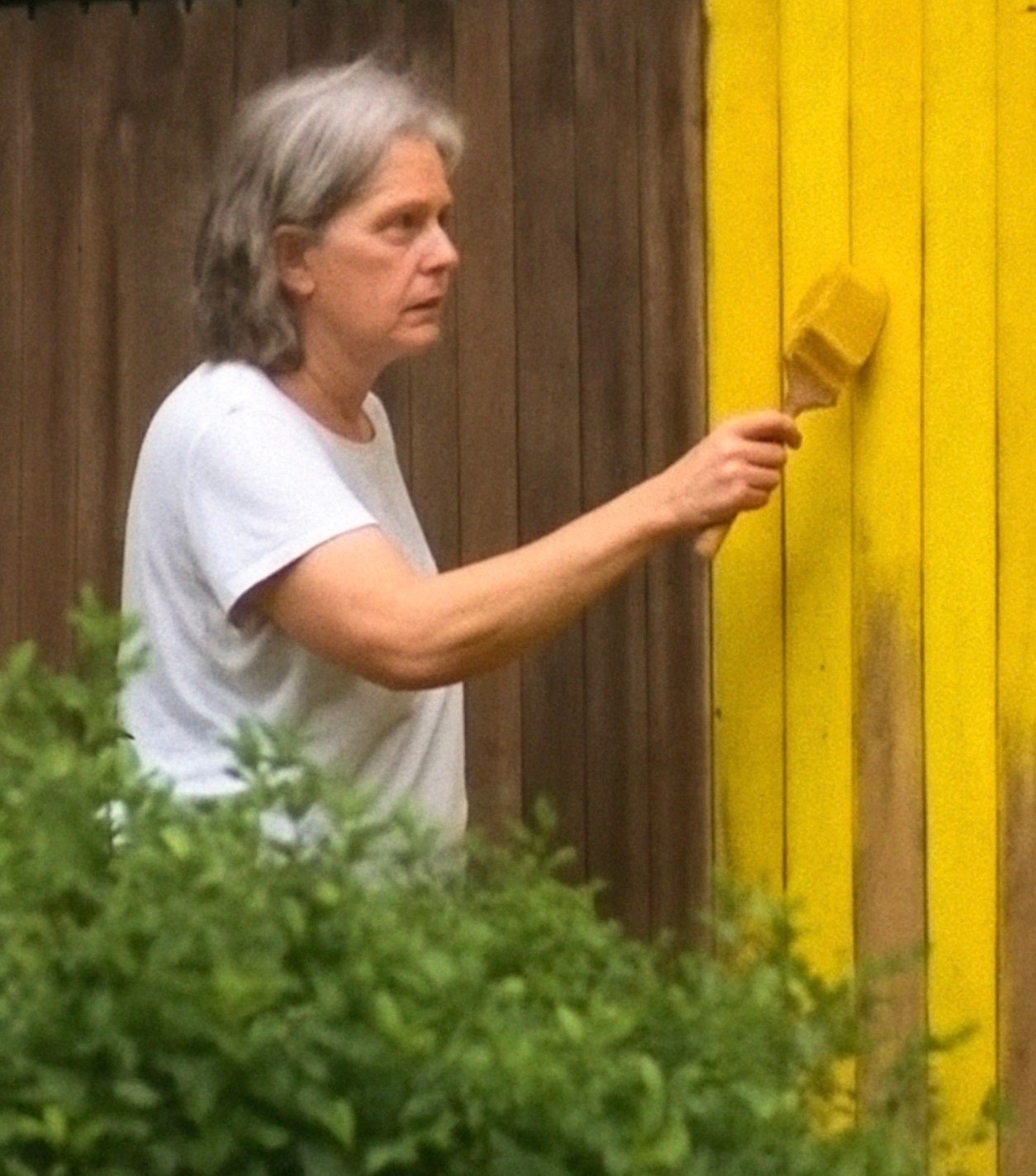
First, the yellow fence. I’d found a half-used can in the shed—ugly smell, cheerful color. The next day, Linda’s fence was the same yellow.
Then my mailbox. I spent hours making it—wooden, with a carved bird on top. The next morning, her mailbox matched mine down to the bird.
I planted daisies. She planted daisies. Same curved line, same little border stones.
One morning, I was doing yoga outside. Nothing fancy—just stretching. I looked over. Linda was wobbling in the same pose, wearing jeans and a floppy hat.
I’d had enough.
I marched over, knocked on her gate. “Linda! We need to talk!”
She opened the door slowly. Her eyes were wide, wary.
“Why are you copying everything I do? What do you want from me?”
She said nothing. Just stepped back and gestured me inside.
And that’s when I saw them.
Dozens of letters. Scattered across her table. Every one addressed to me.
She handed me the top one, her hands shaking.
“My dear Ellie,
I don’t know how to talk to you. I don’t know if you’d even want to listen.
But I am… your mother.
When you were born, I was overwhelmed. I have autism. Your father thought it best that a stable family raise you. But I never stopped thinking about you.
When Henry died, I kept the farm going. And when you arrived… I didn’t know how to speak to you. So I copied you. It was my way of being close.”
I stared at the letter, then picked up another. A photo slipped out: a younger Linda holding a toddler. Me.
“You’re my…”
“My daughter,” she whispered. “You’re Ellie.”
I turned and ran. Past the fence. Past the daisies. I didn’t know what I felt. But I couldn’t hold it in.
I stayed inside for days. Didn’t read. Didn’t touch the flowers. Just stared at the ceiling, waiting for some truth to make itself clear.
I thought knowing where I came from would bring peace. Instead, it cracked something open.
Then one morning, I opened the front door.
A bundle of letters sat on my porch—tied together, labeled by year. One for every year of my life. Thirty letters.
Inside were drawings, dried petals, birthday wishes she’d never said out loud. She had written to me every year. Imagining my life. Wishing me well. Loving me in silence.
And for the first time… I didn’t feel forgotten.
On the third day, I found a note under a jar of jam.
“Saved the milk in my fridge.
Love, Mom.”
Mom.
That word had never felt real before. But now it did.
Maybe she hadn’t failed me. Maybe the world had failed us both. But I had the chance to rewrite our ending.
I stepped outside, barefoot in the morning sun.
Linda was doing yoga in her yard again—wobbling, serious, trying. She glanced over, unsure.
“That’s the warrior pose,” I called gently. “Not my favorite either.”
She blinked. A shy smile tugged at her lips.
“You’re doing great,” I said. “But… lose the hat.”
She took it off and tried the tree pose. Wobbled. Fell. I laughed—really laughed—for the first time in days.
I walked toward the fence.
“Let’s make a deal. I’ll teach you one pose… but no more mailbox copying.”
“Okay,” she whispered.
We stood there, awkward and honest. No longer strangers. No longer alone.
Later, over tea, I pointed to the photo she’d given me.
“That’s you?”
She nodded.
“And that’s my daughter. Ellie.”
“I’ve read all your letters,” I said softly. “Thank you… Mom.”
She clutched her teacup with both hands.
“Tomorrow,” she said, “can I try the one where you balance on one leg?”
I nodded. We both smiled.
And suddenly, life began to feel like it had color again.
That yellow fence? It wasn’t the start of a feud.
It was the beginning of something that finally felt like home.