
Nikolai Sergeyevich lived alone on the outskirts of the district center in a large, quiet house—with two small children in his care. Every chore, every responsibility fell squarely on his shoulders. As the chief engineer at the local car depot, his job was demanding. Business trips for parts, equipment, and vehicles were frequent. If not for old Pakhomovna—a warmhearted, dependable woman—he might have had to give up his well-paying job or, worse, send the children to an orphanage.
Nikolai’s younger daughter, Nina, could hear but never spoke. The doctors advised waiting until she turned six. If she still hadn’t spoken by then, they recommended a specialized institution. But Nina couldn’t bear the idea of being separated from her older brother, Sasha, who understood her better than anyone. Because of this close bond, neither of the children went to kindergarten.
But Sasha wasn’t the only one who understood Nina. Out in the yard, guarding the house from his kennel, lived Sultan—a massive, shaggy dog whose deep, thunderous bark made the window panes rattle. Fiercely loyal, he recognized only Nikolai and Pakhomovna, keeping everyone else at bay, as a true guard dog should.
Yet, with the children, Sultan was a gentle giant. They could crawl into his kennel, cling to his thick fur as they rode on his back, or dress him in their father’s old jacket—and he let them. He played along with their every game, a willing participant in their world of make-believe.
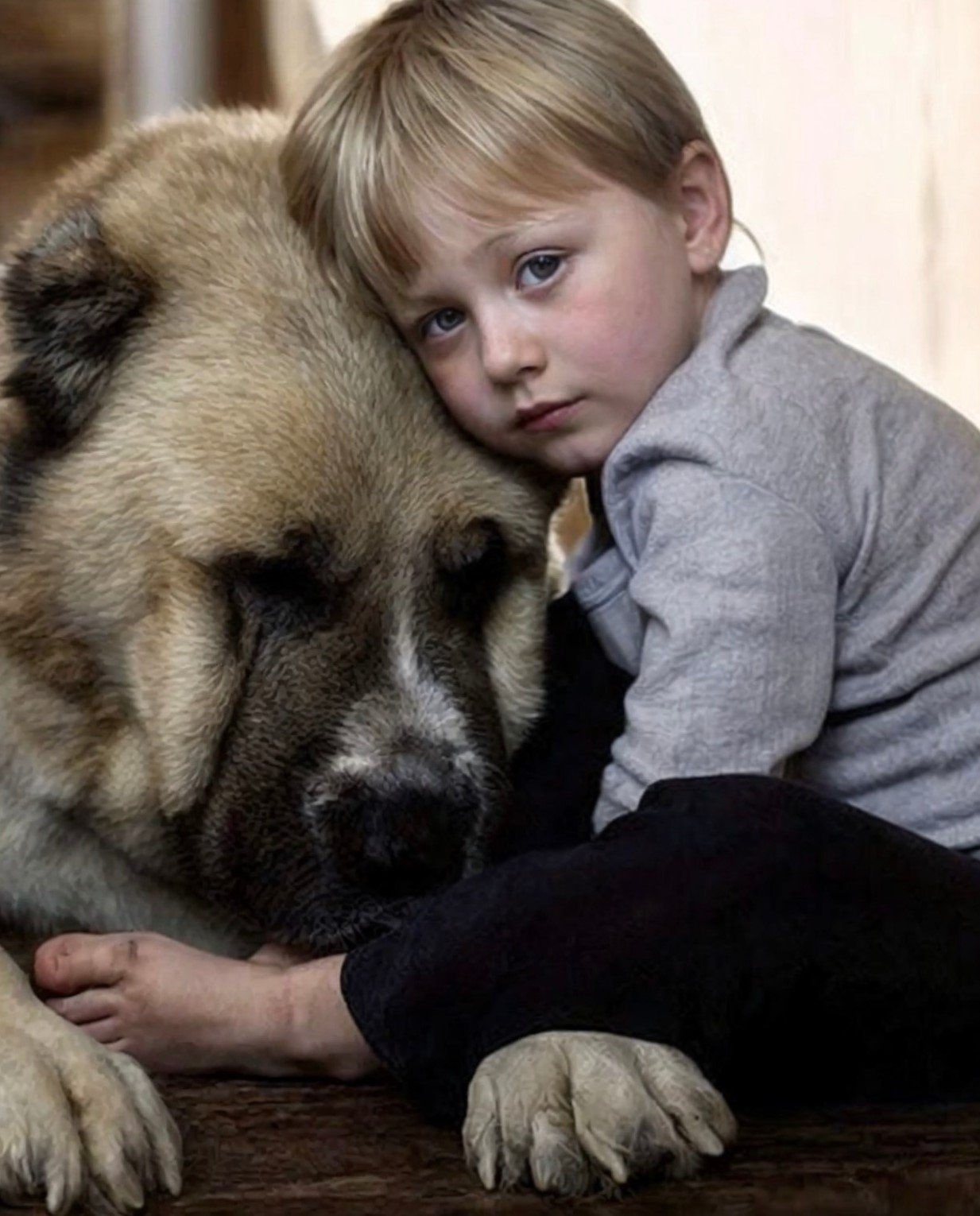
Nikolai often watched with quiet wonder as Nina leaned in to whisper something into Sultan’s ear. The dog would listen closely, then respond—licking her face with his rough tongue as if acknowledging her secret. Her laughter would ring out, full of joy. Deep down, Nikolai believed they truly understood one another—the silent girl and the serious dog.
Pakhomovna remained a loyal helper, but age had caught up with her. Her hands ached, and her strength was fading.
“You need a housekeeper, Nikolai Sergeyevich,” she would sigh. “I’d love to help more, but these joints of mine won’t let me. You can’t do it all on your own.”
During the November holidays, an old colleague came to visit. They spent the evening sharing stories over a warm meal. Later, Nikolai walked his friend to the station. On a whim, they stopped at the buffet for a drink. The woman behind the counter—a kind-looking, middle-aged waitress—smiled as she poured Nikolai’s beer. That’s how he met Galina.
Soon Nikolai began stopping by the station buffet more often. Galina lived in a small room in an old wooden house nearby. She told him she was a widow, recently relocated from another region. Her husband had died in the war, and they’d had no children.
One day, Nikolai invited her to visit his home. Galina arrived dressed nicely, carrying treats and toys. She spent the day playing with the children, drawing pictures, reading them fairy tales. Sasha and Nina took to her immediately—charmed by her energy and warmth.
But Sultan was not so welcoming. The moment she entered the yard, he growled, deep and threatening, refusing the treats she offered. Every move she made was met with suspicion.
“Don’t worry,” Nikolai said, trying to soothe her nerves. “He’ll come around. He’s just not used to strangers.”