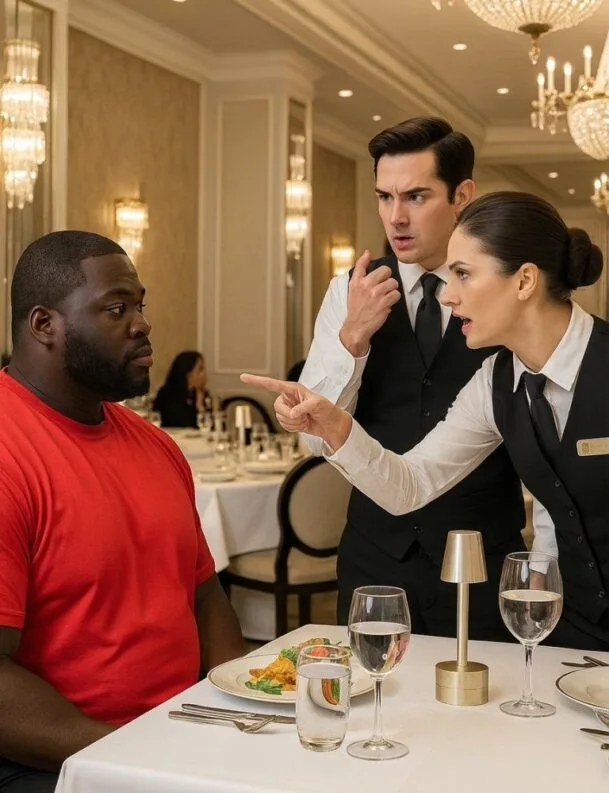
The afternoon sun filtered through the dusty blinds of Miller’s Diner, a modest restaurant on the side of Interstate 95 in Pennsylvania. The air was thick with the smell of fried onions, reheated coffee, and withered hopes. It was one of those places where truckers stopped to stave off hunger, neighbors shared gossip, and life passed in almost invisible fragments.
In a corner, tucked away from the hustle and bustle, a tall man in a faded sweatshirt flipped through the menu with the concentration of someone more hungry than curious. His sneakers were worn, his jeans ripped, and his face impenetrable. To the staff, he was just another traveler trying to stretch his last dollar in a place where even refilled coffee came at a price.
When the waitress approached, her voice was sharp:
„We don’t serve the poor here,” she said, loud enough to make several customers turn their heads.
His badge was marked „Karen,” and everyone knew he only smiled when the tip warranted it.
The man looked up, calm but with an intensity that filled the room with silence. A truck driver cleared his throat uncomfortably; a young mother clutched her son to her chest. No one expected trouble at Miller’s, but the waitress had lit a spark they didn’t understand.
He didn’t respond immediately. He calmly closed the menu and placed it on the table with a measured, almost rehearsed gesture, like someone who has learned not to let their emotions escape. Karen, believing that silence to be submission, leaned toward him with contempt:
„I’m telling you again: if you can’t pay, get lost. We don’t need guys like you here.”
Eddie, the cook, appeared at the kitchen window. He recognized him immediately and froze. This wasn’t just any homeless man. He’d seen that face before, not in a forgotten diner, but on bigger stages: on television, in interviews, in packed auditoriums.
The waitress didn’t know who she’d insulted. In front of her was Shaquille Johnson—”Big Shaq” to those who knew his story—a former college basketball star turned philanthropist. A man who had funded child nutrition programs, scholarships for inner-city youth, and campaigns to prove everyone deserves a seat at the table.
And yet, here he was being kicked out for looking too poor.
The tension was palpable. The murmurs grew louder. Finally, Big Shaq leaned back in his seat and, in a deep, calm voice, said,
„Is this how you treat people who don’t fit your idea of ’right’?”
The place fell silent again. Karen snorted, ready to retort, but Eddie emerged from the kitchen, wiping his hands on his apron.
„Karen, stop it. Do you know who you’re talking to?”
She frowned.
„It doesn’t matter who it is. He looks penniless, and I have bills to pay.” People like him never tip.
It was the wrong line.
Linda, a retired teacher at a nearby table, stood up indignantly:
„Shame on you! I know very well who this man is. Thanks to him, our school had a computer lab. My nephew learned to program there.”
Karen blushed, but didn’t budge:
„Even if he built the White House, if he doesn’t ask for anything, he’s a loser. The administration will back me up.”
Eddie shook his head.
„No, the administration won’t back you up,” he replied respectfully, looking at Shaq. „Sir, I’m sorry about what happened. You’re always welcome here. Allow me to buy you a plate.”

Shaq raised his hand:
„I’m not looking for a free lunch. I came because I heard they make the best apple pie on the highway. I was willing to pay double if it was worth it. But what I see…” he paused to let his words sink in. „…is more bitter than any empty stomach.”
The silence was thick. Karen didn’t apologize. Then, from the back, a huge truck driver stood up:
„Ma’am, you made a mistake. This man has done more for the country than you could in ten lifetimes. I saw it on the news: he helped rebuild homes after the hurricane in Florida. And you deny him a slice of cake?”
The tide had turned. The customers were backing him up, some recording with their phones. This was no longer a simple incident: this was about to become global news.
Shaq stood up slowly.
„I don’t want any scandal. I don’t want any trouble. Just a reminder: respect costs nothing. And kindness never ruins anyone.”
He left a hundred-dollar bill on the table and left.
The video of the incident went viral, journalists flooded the place, and Karen ended up in the eye of the storm. Shaq, on the other hand, chose silence: he donated a generous sum to the city’s food bank to support single mothers and families in need.
Weeks later, he returned to Miller’s Diner. No cameras, no noise. Just a man who wanted to try the famous apple pie. Eddie greeted him with a handshake, Linda with a knowing smile. Karen was gone: she’d quit.
Shaq tried the
cake and nodded calmly:
„This is worth double the price,” he said, leaving another hundred-dollar bill under the plate.
Long after his departure, the lesson lingered in the air. Because in a country marked by divisions and prejudices, sometimes an act of cruelty—or one of kindness—is enough to leave an indelible mark.